NEXTKEY: NON-CUSTODIAL CRYPTO INHERITANCE
A dead-man's-switch protocol for trustless digital asset inheritance. Ensures secure transfer of funds to beneficiaries after a predefined period of inactivity.
Overview
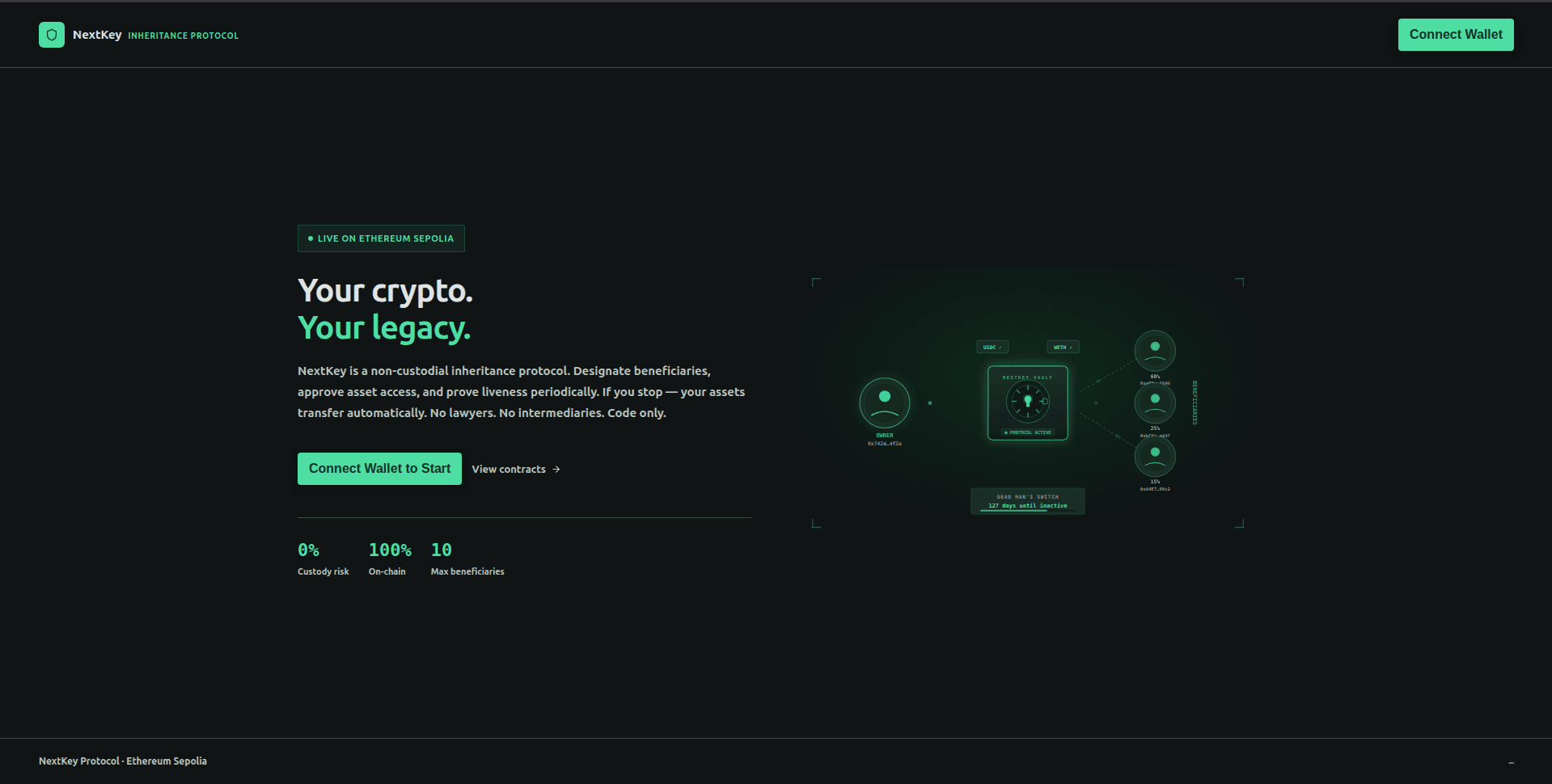
NextKey is a non-custodial inheritance protocol for Ethereum assets. An owner deposits ETH or ERC-20 tokens into their own vault and designates beneficiaries who can claim those assets only after the owner stops checking in for an extended period.
VaultFactory architecture
A VaultFactory contract deploys an individual vault per owner, keeping each user's assets and configuration isolated from every other vault rather than pooling funds in a single shared contract.
Beneficiaries
Each vault owner defines one or more beneficiary addresses ahead of time. Beneficiaries have no access to the vault while the owner is active — their claim right only becomes exercisable once the vault has entered its inactivity state.
Guardian controls
An optional guardian role can be assigned by the owner to add a layer of oversight over sensitive changes — for example, pausing a claim in progress — without giving the guardian custody of the underlying assets.
Time-based claims
The vault owner performs periodic check-ins to signal they're still active. If a check-in interval is missed, the vault enters a grace period before beneficiaries are able to initiate a claim, and a further claim delay applies once a claim is initiated — giving the owner multiple windows to reassert control before assets move.
ERC-20 assets
Vaults support both native ETH and ERC-20 tokens, so an owner can configure inheritance for a mixed portfolio of assets within the same vault.
Frontend
The interface walks an owner through vault setup, beneficiary configuration, and check-ins, and gives beneficiaries visibility into a vault's current state once they're eligible to interact with it.
Testing
Vault lifecycle logic — check-ins, grace periods, claim delays, and the transitions between them — is tested with Hardhat.
Deployment
Vaults and the VaultFactory are deployed via Hardhat scripts to Ethereum testnets during development.